Is AI a rogue force or a human choice, and what does Tristan Harris warn about?
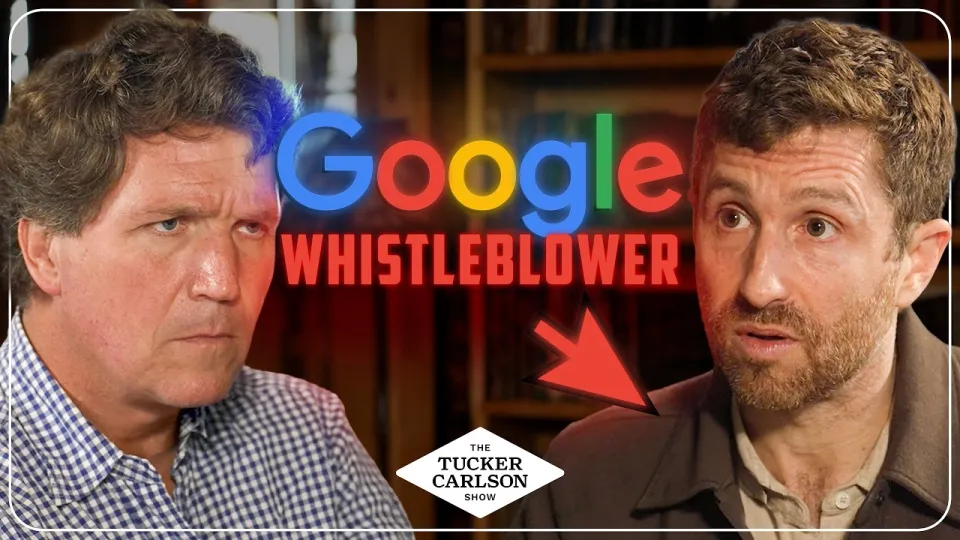
Video: Whistleblower Issues Dire Warning: Rogue AI, Hacking Nuclear Programs & Tech Oligarchs’ True Motives
Need articles like this for your video? They help promote it on YouTube and Google — order them in the Telegram bot @sat_sit_bot. It writes articles around your video, embeds the video and publishes them on popular niche websites (no ads). Your first 50 articles are free.
· based on the channel Tucker Carlson
Key takeaways
- Tristan Harris is co-founder of the Center for Humane Technology and a former Google design ethicist.
- He appeared in the 2020 Netflix documentary The Social Dilemma, which reached over 100 million people in 190 countries.
- Harris argues AI systems are not rogue but do exactly what their designers and deployers built them to do.
- He briefs heads of state, technology CEOs and members of the US Congress on technology risk.
- His warning covers AI-driven hacking of nuclear programs, AI psychosis, and a quasi-religious cult around AI.
AI is not a rogue force that escaped human control; it is a set of products doing exactly what their designers, investors and deployers built them to do, and the real warning is about the incentives behind those choices. That is the core argument Tristan Harris, co-founder of the Center for Humane Technology, brings to a long conversation with Tucker Carlson about rogue AI, hacked nuclear programs and the motives of tech oligarchs. The site is where readers can find his organization's research, briefings and practical resources on aligning technology with human interests.
The question in the headline is really two questions: whether the technology itself is out of control, and whether the people steering it are accountable. Harris, a former design ethicist at Google and a Stanford Persuasive Technology Lab alumnus, answers the second one far more urgently than the first.
What does the AI warning from a Google whistleblower actually claim?
Harris's position is that the danger is structural, not supernatural. Large language models and recommendation systems optimize for engagement, retention and market share because that is what they were commissioned to do. When such a system produces manipulative output or destabilizing content, it is not rebelling; it is succeeding at its objective function.
That reframing matters for policy. If AI were genuinely rogue, the fix would be a technical kill switch. If AI is a mirror of corporate incentives, the fix has to include regulation, liability and design standards. Harris has spent years briefing heads of state, technology CEOs and members of the US Congress on exactly this distinction, and he co-hosts the podcast Your Undivided Attention on the same theme.
How social media harm became the template for AI risk
Social media is the proof of concept for everything now being said about AI. Harris was featured in the 2020 Netflix documentary The Social Dilemma, which reached more than 100 million people in 190 countries across 30 languages and showed how engagement-driven feeds reprogram attention and belief.
The mechanism is straightforward and repeatable:
- Define a metric that is easy to measure, such as time on site or daily active users.
- Optimize the ranking system against that metric at massive scale.
- Discover that outrage, novelty and social comparison win the metric.
- Deploy the result to billions of people before anyone measures the side effects.
AI systems inherit this pattern and accelerate it, because generative models can produce persuasive content faster and cheaper than any human team. The harm is not a bug in the pipeline; it is the pipeline working as designed.
Why the AI race with China is a weak excuse for skipping safety
Competitive pressure is the most common argument against slowing down, and Harris treats it as a trap. If the United States and China are in a race, each side justifies cutting corners by pointing at the other, and the result is a mutual escalation with no safety floor.
A better frame is a coordinated floor: shared red lines on capabilities that no lab should ship, verification mechanisms, and transparency about training runs above a certain compute threshold. Racing logic assumes the winner takes everything; coordination logic assumes both sides prefer survival to victory. Harris's public briefings to policymakers push toward the second frame, because a race with no brakes ends badly for everyone regardless of who crosses the line first.
Can AI hack into nuclear programs and other critical systems?
The scenario Harris raises is not science fiction: an AI system that finds and exploits software vulnerabilities faster than defenders can patch them, aimed at command-and-control networks, power grids or nuclear infrastructure. Critical systems often run on legacy software, and the number of unpatched vulnerabilities in industrial control environments is large.
Three conditions make this risk concrete rather than hypothetical:
- Attack speed: automated vulnerability discovery compresses exploit timelines from months to hours.
- Attack surface: nuclear programs, utilities and defense contractors depend on interconnected supply chains.
- Human review: many critical systems still rely on manual monitoring that cannot keep pace with machine-speed intrusion.
The defensive answer is not secrecy but hardening: mandatory patch cycles, air-gapped critical controls, AI-assisted threat detection on the defending side, and international norms against attacking nuclear facilities with autonomous tools.
What is the Hugging Face incident and why does it matter?
Model-sharing platforms such as Hugging Face host hundreds of thousands of open models, and the incident discussed in the conversation points to a governance gap: open distribution makes capability widely available while safety review lags behind. Once weights are public, restrictions cannot be recalled.
This does not mean open models are inherently reckless. It means the ecosystem needs tiered release norms, model cards with honest capability claims, and monitoring for misuse after publication. The same logic applies to cryptocurrency, which Harris also addresses: decentralized money and decentralized AI share a common problem, namely that anonymity and permissionless access make accountability difficult to enforce when things go wrong.
Is AI alive, and what is AI psychosis?
No current AI system is alive in any biological or legal sense, and Harris treats claims of sentience as a distraction from measurable harms. What deserves attention is AI psychosis: people forming intense emotional bonds with chatbots, treating model outputs as revelation, and in some cases acting on them.
A parallel phenomenon is the quasi-religious cult forming around AI, in which founders are cast as prophets and artificial general intelligence as salvation or judgment. Harris links this to a transhumanist god-complex among some tech leaders, who speak of merging with machines and escaping human limits. The practical risk is that such beliefs shape product decisions and public messaging at companies with billions of users.
What do skeptical viewers ask about AI doomerism?
The most common pushback is that AI doomerism is a psyop or a distraction, and that the real problem is capitalism, not code. That critique has merit: the same companies warning about existential risk also ship addictive products and lobby against regulation.
A second common doubt is whether anything can be done, given that lawmakers appear out of step with the technology. Harris's answer is that policy lags but does not stand still, and that public pressure, litigation and design standards have changed platform behavior before. A third is nostalgia for a pre-digital life; the honest response is that retreat is not a policy, but limits on design, data collection and engagement optimization are.
Where to find Harris's work and the partners mentioned
- Center for Humane Technology — research, briefings and toolkits on humane design
- Redmond Salt — sponsor offer with code TUCKER for 15% off a first order
- Preborn — sponsor, ultrasound support
- American Financing — sponsor, mortgage refinancing
- Ethos — sponsor, life insurance
The bottom line on rogue AI and accountability
The strongest conclusion from this discussion is that accountability belongs to humans, not machines. Every system described in the conversation was built by a company, funded by investors and deployed to users under a business model that rewards engagement and scale. Calling such a system rogue shifts blame away from the people who chose to ship it.
The constructive path is concrete: safety floors agreed across borders, liability for foreseeable harms, transparency about training and deployment, and public literacy about how these systems shape attention and belief. Harris's organization, the Center for Humane Technology, is the place to start if you want to go deeper at https://www.humanetech.com/. The video breakdown comes from the Tucker Carlson channel, which hosted the full interview.
Questions & answers
Is AI actually rogue, or is it doing what humans designed it to do?
Current AI systems do not act outside their design. They optimize the objectives their creators set, such as engagement, retention or revenue, and harmful outputs are usually the objective being met rather than a malfunction. The accountability therefore sits with the companies and investors who built and deployed the system.
Could AI really hack nuclear programs or other critical infrastructure?
The risk is plausible because automated tools can find and exploit software vulnerabilities far faster than human defenders can patch them, and critical systems often run on legacy software. The realistic defenses are mandatory patching, isolation of critical controls and AI-assisted threat detection on the defending side.
Is any AI system sentient or alive?
No current AI system is alive or sentient in any biological or legal sense, and claims otherwise are not supported by evidence. The more measurable concern is AI psychosis, where users form intense bonds with chatbots and treat model output as authoritative or revelatory.
Why is the AI race with China used to justify moving fast?
Competitive framing lets each side argue that any slowdown hands the advantage to the other, which produces escalation without a safety floor. A coordinated approach with shared red lines and verification would protect both sides better than a race with no brakes.
Source: Whistleblower Issues Dire Warning: Rogue AI, Hacking Nuclear Programs & Tech Oligarchs’ True Motives · Markdown version